Written by young people. Heard by policymakers.

Good decisions for the Scheldt need young voices too. In Ghent in May 2026, our participants set out what they want from policymakers. In June we took their recommendations to the International Scheldt Commission, where France, Belgium and the Netherlands work together on the river.

Letter to policymakers

Living with water and winning people over: a letter on flooding and citizen participation, written by young people in Ghent in May 2026. Their words, their voice.

Scheldt Youth Parliament

Young people of the exchange in Ghent

Ghent, May 2026

To the policymakers of the Scheldt

Subject: Give the land back to water, and show people what they gain

Dear Policymakers of the Scheldt,

Do you feel the pressure? The responsibility of steering the car that holds thousands, or even millions of people in it.

Maybe you do, maybe you don't. Either way, I'd like to ask you to look up. Is the city we are building harmoniously designed to manage and maintain itself, like a meandering river? Or is it rushed, controlled, and constricting, like how the Scheldt has been trapped between canal walls?

We know it's not easy. Deputy Mayor Filip Watteeuw himself told us of the horrors of angry people. Death threats, protests, court cases. You want to hear what he wishes he had done?

Mobilizing the quiet people who agree, not fighting those who don't.

People will be angry and scared when they feel that they are losing something. So let's show them what they gain.

Max, the water engineer, agrees. He fought people for years to convince them to trust nature. To give the land back to water. And what if we change the way that we talk about nature?

What if the story we tell is not about winning the land or giving it back? What if it's inviting nature to work with us? What if we view nature not as a monster who must be... but rather as a person who has the skills and experience we need to help us.

Written together during the exchange weekend in Ghent, 8 to 10 May 2026. Typed from their three handwritten pages, lightly edited.

What we ask of policymakers

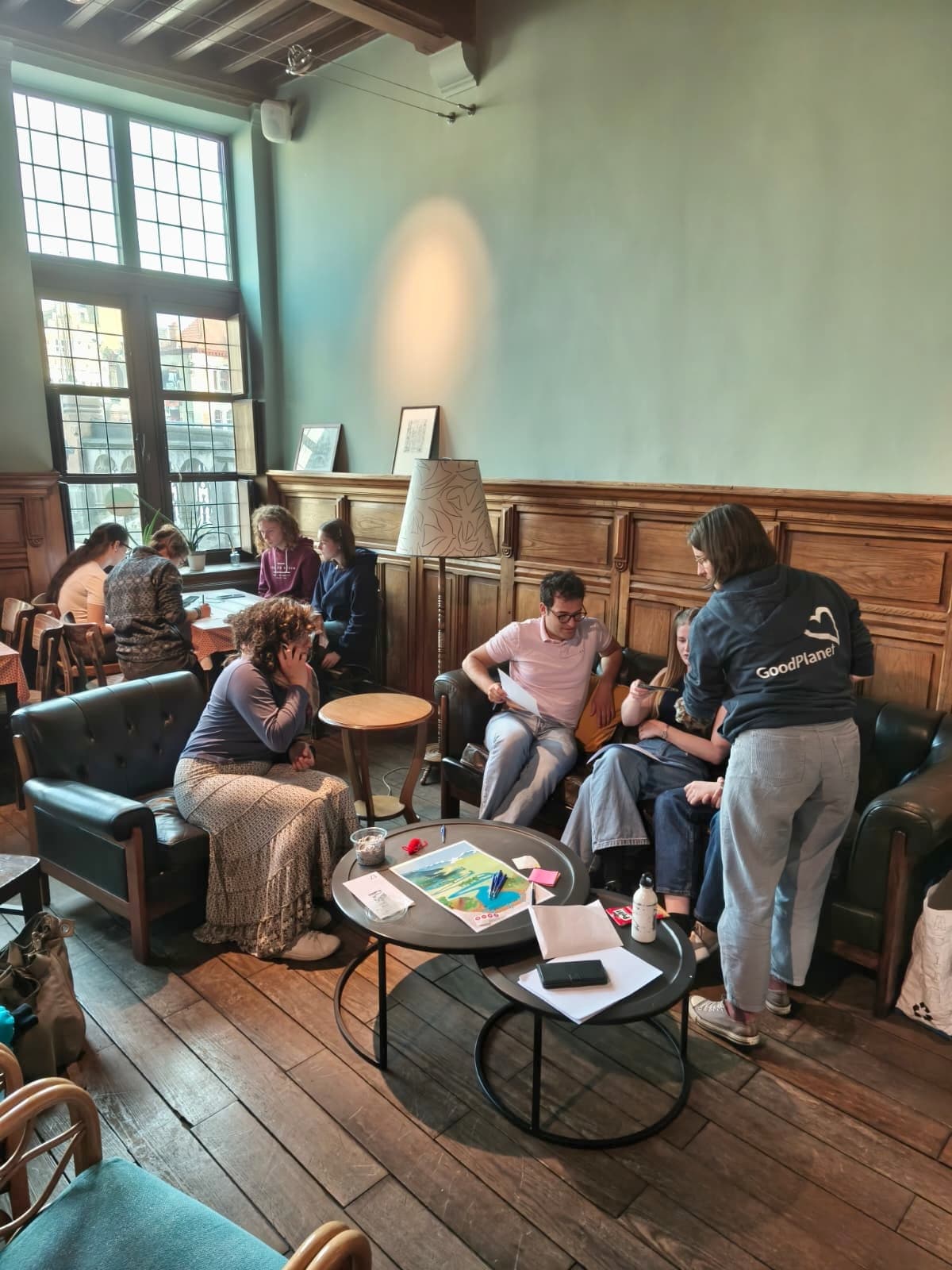
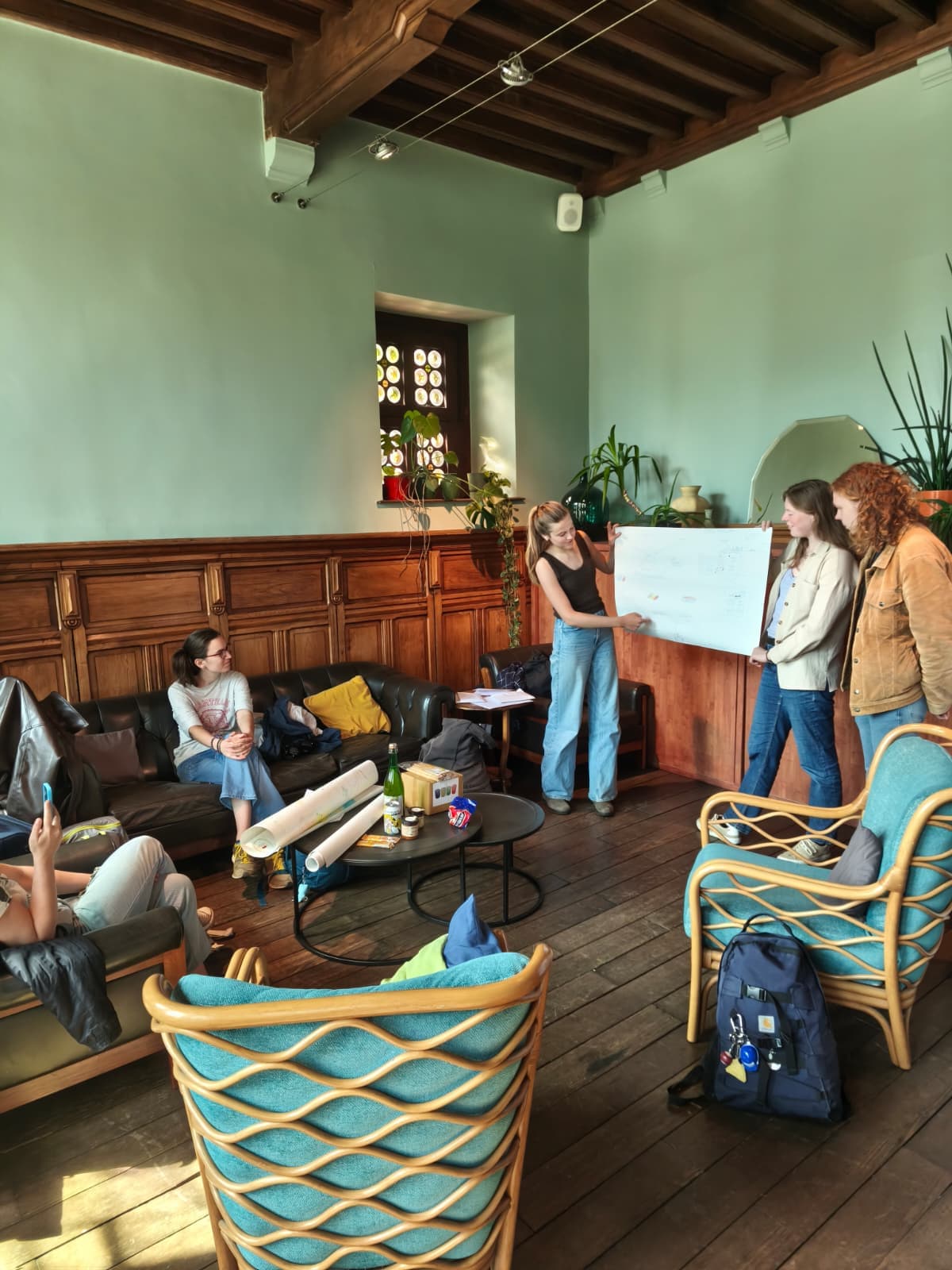
After an afternoon cycling past flood defences in Ghent, three groups turned what they saw into recommendations.

Group 1

Combine natural and technical flood defences

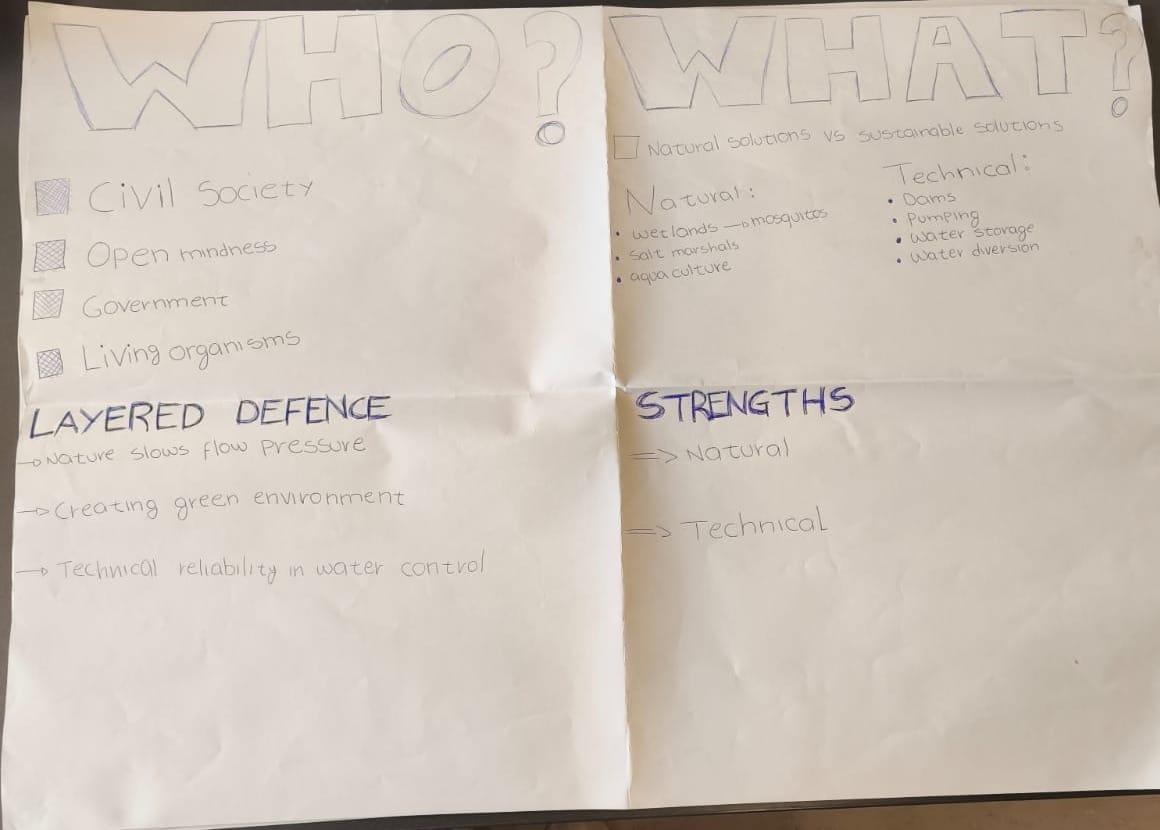
We ask for layered flood defences: wetlands and salt marshes to slow the water down, dams and pumps for reliable water control.

What they looked at

The group weighed natural flood defences against technical ones. Natural: wetlands, salt marshes and nature restoration, more sustainable and better for wildlife. Technical: dams, pumps, water storage and diversion, reliable and easy to control.

Detail of the group's poster: Layered defence. Nature slows flow pressure, creating green environment, technical reliability in water control
From the group's poster
Group 2

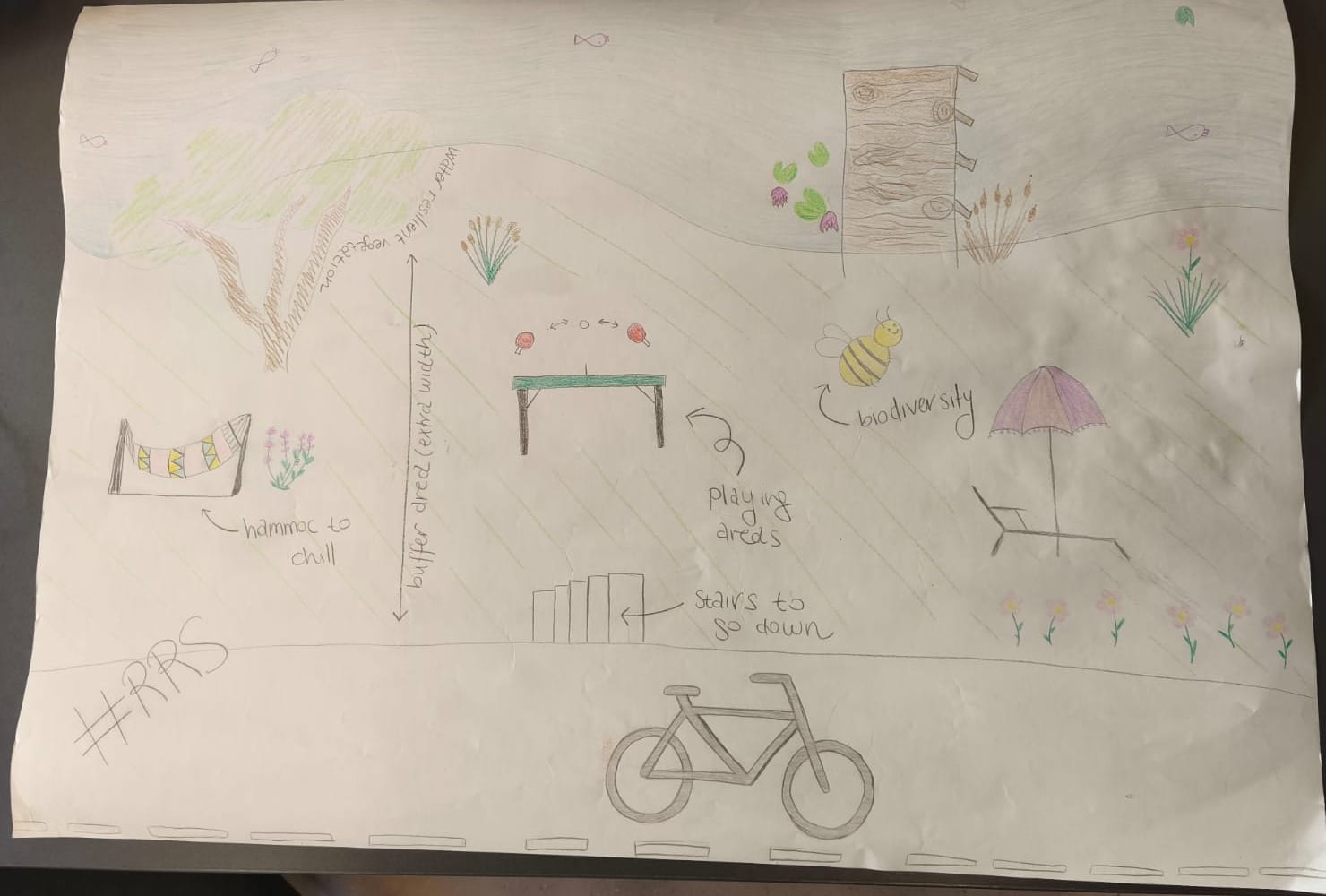
Design public space for water and for people

We ask that climate measures also make daily life better: wider green strips along the water, play areas built into spaces that are allowed to flood, ground that lets rain through.

What they looked at

The group looked at public space that copes with water and is better to live in. They want wider green strips along the water, more nature, play areas that are allowed to flood, places to sit and ground that lets rain through.

Detail of the group's drawing of a riverbank: a hammock to chill, a wide buffer area, a table tennis table as a playing area and stairs down to the water
From the group's poster
Group 3

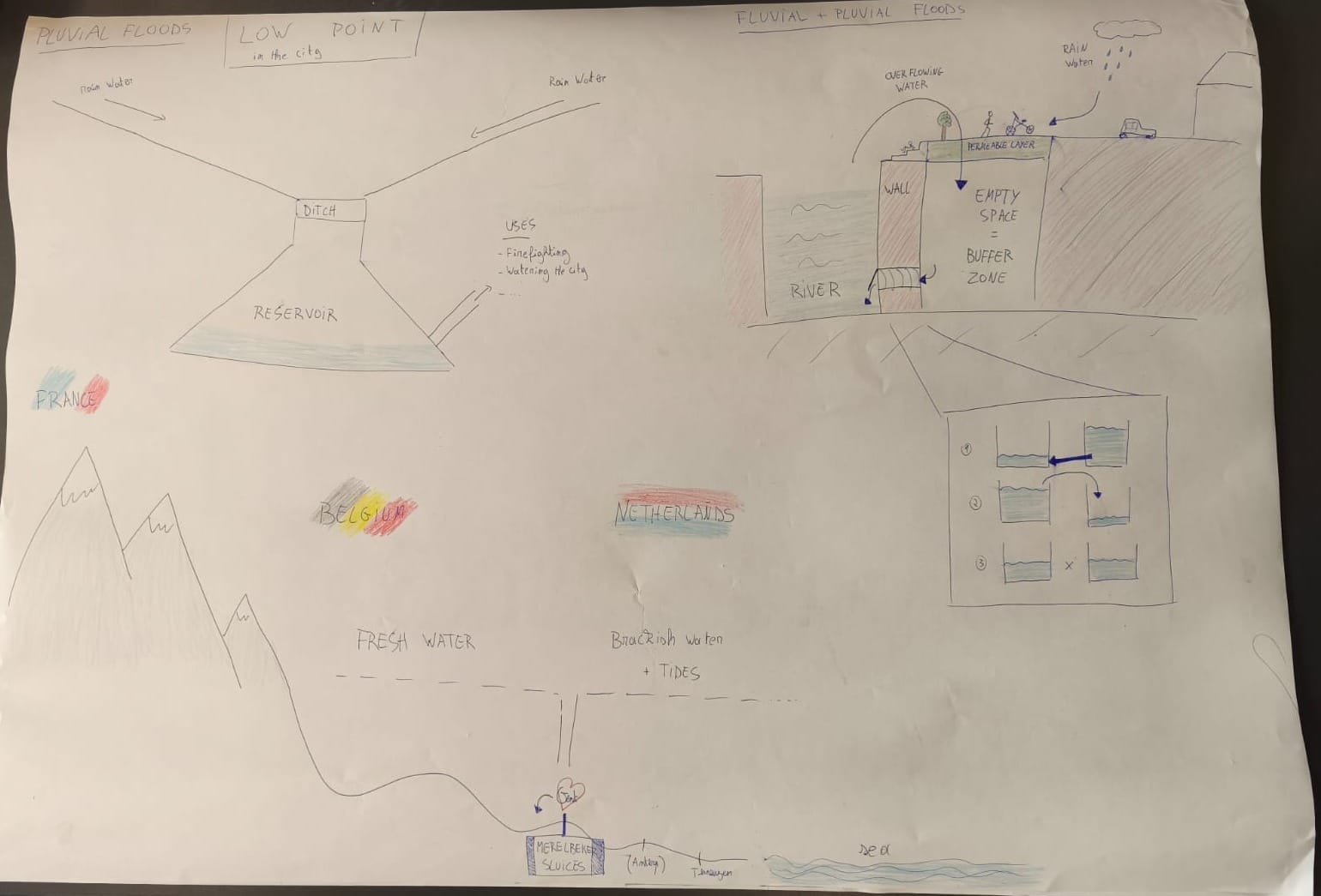
Understand the water system, and its borders

We ask for cooperation across the whole basin, from France through Belgium to the Netherlands, because what happens upstream is felt downstream.

What they looked at

The group compared floods from heavy rain with floods from an overflowing river. They looked at why low-lying parts of a city flood, and how storage zones and reservoirs hold water back or send it elsewhere. Then they followed the water from France through Belgium to the Netherlands.

Detail of the group's diagram of river floods and rain floods: a river wall, a permeable layer with a cycle path on top, and an empty space below as a buffer zone
From the group's poster

Every group made its case

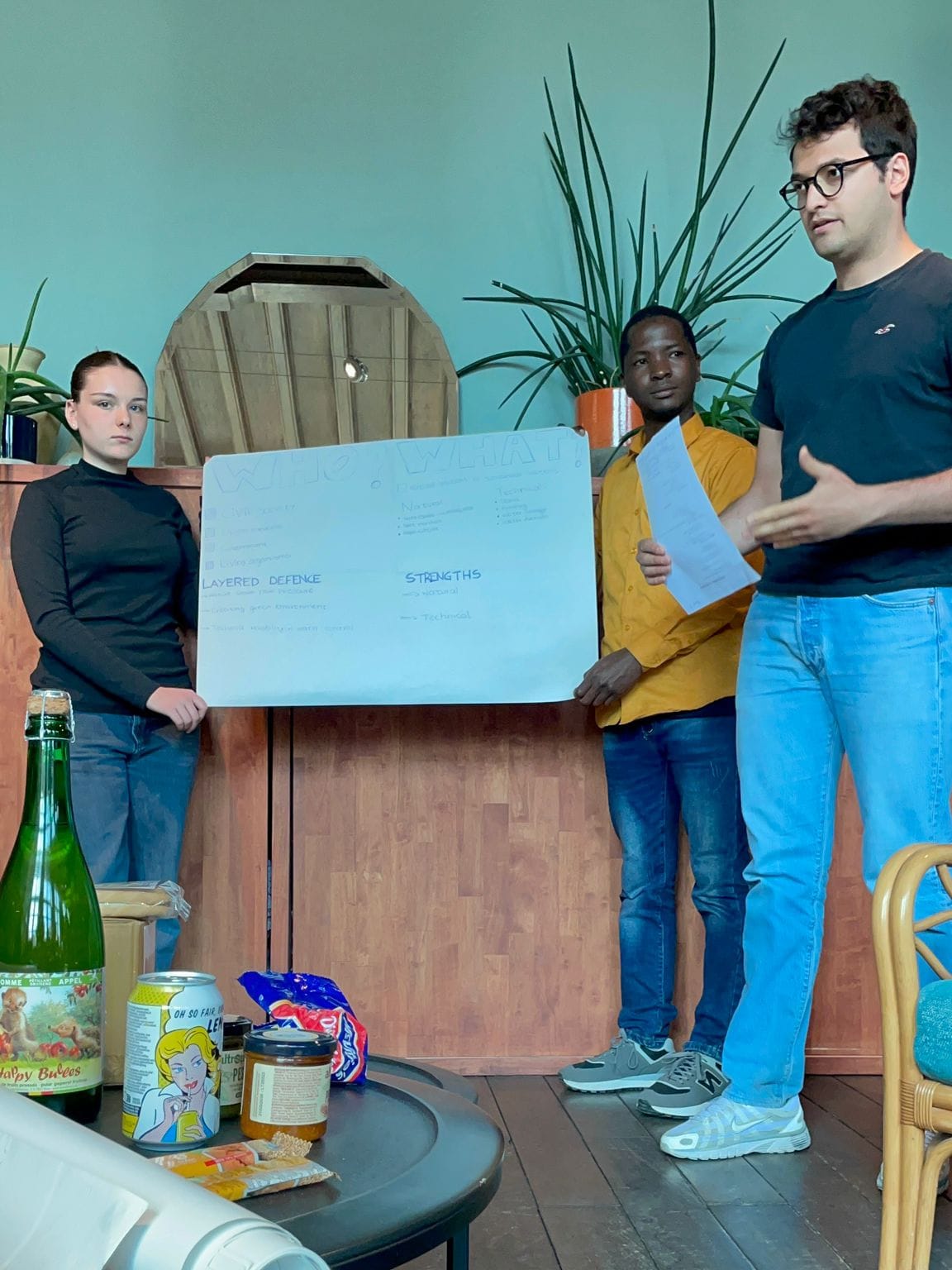
After the bike tour, each group put its recommendations on a poster and presented them to the others. That is where the three recommendations took shape.

See the original posters (3)

The three posters as the groups made them (annex 1 of the Ghent report). Click a poster to see it larger.

Hand-lettered poster headed Who? What?, listing civil society, open-mindedness, government and living organisms, natural and technical solutions, and layered defence (view larger)
Group 1: natural and technical flood defences, in layers
Coloured-pencil drawing of a riverbank designed for water and people: a wide buffer area with a hammock, table tennis, a bench under a parasol, stairs down to the water, a bee, reeds and a cycle path (view larger)
Group 2: public space for water and for people
Poster with diagrams of a reservoir at a low point in the city, a river wall with a buffer zone, and the Scheldt flowing from France through Belgium to the sea in the Netherlands (view larger)
Group 3: the water system and its borders

From the riverbank to the commission

Since 2012 we have been observers at the International Scheldt Commission. This is how our 2026 participants made their voice heard, from Ghent to Tournai.

  1. 8 May 2026, Ghent

    Meet a politician

    Filip Watteeuw, one of Ghent's deputy mayors, told the group about protests, court cases and even death threats. His advice: mobilise the people who support you, because those who disagree are often the loudest.

  2. 9 May 2026, Ghent

    See the river up close

    Max Verdonck of De Vlaamse Waterweg, the Flemish waterways agency, took the group through the Scheldt's flood defences. In the afternoon they cycled through Ghent to see the defences and nature-based solutions for themselves.

  3. 9 and 10 May 2026, Ghent

    Put it in writing

    Together they wrote a letter to policymakers, in their own words. In three groups, they also turned what they saw into recommendations and presented them to each other.

  4. 25 June 2026, Tournai

    Take the recommendations to Tournai

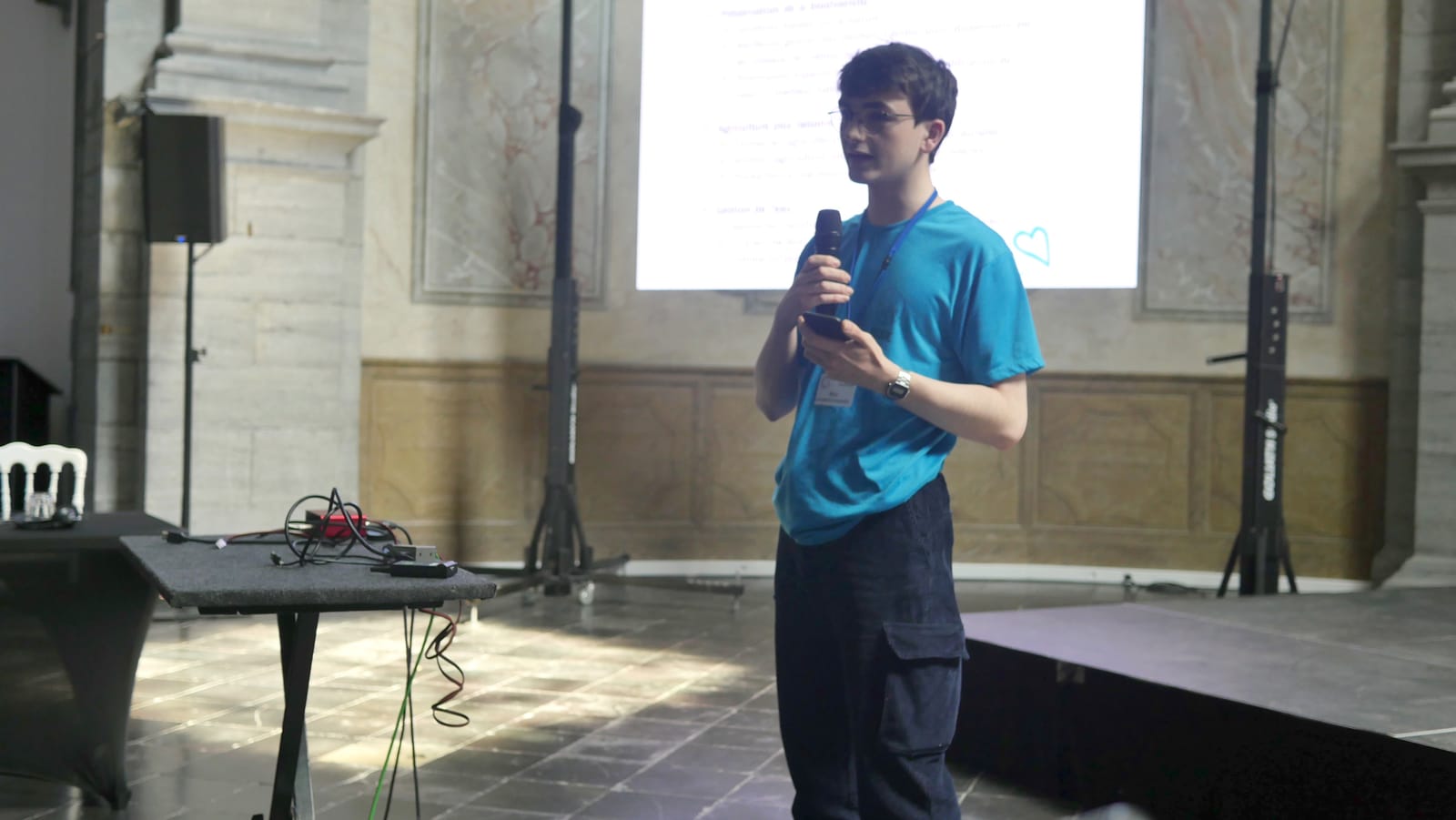
    At the commission's 34th plenary, their recommendations were up on the wall. Mathieu, one of our participants, represented young people throughout the session.

A smiling participant standing beside the group's hand-drawn posters with flood recommendations at the plenary assembly in Tournai
Our posters at the plenary in Tournai, June 2026
The plenary in Tournai

We are worried about the future of the Scheldt, and sometimes we even feel powerless. Nevertheless, we will not hesitate to give our time to actions that make sense to us.

ShérazadeFrance, to the Scheldt Commission, 2021

A river basin like the Scheldt needs the fresh thinking of young people. They have no prejudices and are better at working together than we adults are. Their enthusiasm, openness and ideas are like fresh drops for the Scheldt.

Arnould LefébureSecretary General of the International Scheldt Commission, 2017

Want to make waves?

  • Be heard
  • Make friends
  • Learn by doing
  • Have a good time
Join us

For anyone aged 16 to 26 living in France, Belgium or the Netherlands